.svg)
December 17, 2025
Understanding the UFR Timeline: How Rack-and-Stack Decisions Drive Funding
When it comes to securing funding for unfunded requirements (UFRs),timing and process matter. Our senior capture strategist, Mitch Arnold’s experience across contracting and group-level operations offers a clear picture of how these decisions unfold—especially within the Air Force.
What Is the UFR Process?
Every unit maintains a priority list of unfunded requirements year-round. This list is dynamic, constantly refreshed as new projects emerge and priorities shift. While the Army and Navy have similar processes, this overview focuses on the Air Force.
Key Timeline Milestones
- Year-Round: UFR lists are maintained and updated continuously.
- Mid-January to Late February: Rack-and-stack meetings occur at the group level. Squadron commanders gather with the group commander to review and debate priorities.
- Wing-Level Reviews: Similar meetings happen at the wing level, involving group commanders and wing leadership.
- September 30: Fiscal year money expires—even procurement funds (three-year money) have a hard stop at the end of their cycle.
Inside the Rack-and-Stack Meetings
Picture this:
- The group commander sits at the head of the table.
- Squadron commanders present their projects, displayed on a projector in priority order.
- Each commander advocates for their project, explaining why it should move higher on the list.
- At the wing level, the same process repeats with broader oversight.
These meetings often occur weekly or biweekly, ensuring the list reflects current priorities.
How Funding Flows
When additional funds become available—say, $3 million—the top item on the UFR list gets funded first. If the next project costs more than the remaining funds, leadership may skip to a lower-cost item further down the list. This iterative process continues as money trickles down from higher headquarters.
Why This Matters
Understanding the UFR timeline is critical for anyone seeking to secure funding outside the normal budget cycle. Success depends on:
- Early Engagement: Build relationships with commanders before rack-and-stack season.
- Clear Justification: Be ready to articulate why your requirement deserves priority.
- Flexibility: Have contract vehicles in place to catch funding when it becomes available.
From the Industry Side
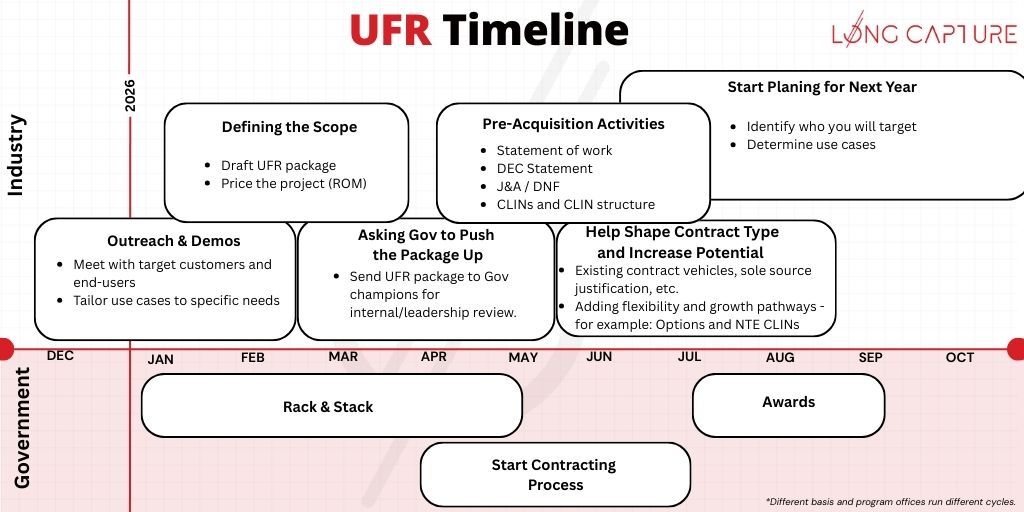
So, on the industry side, you can just put your name in the ring at the beginning of the year, and wait for the government to push it through, right? No.
If you want a realistic chance at this funding, it is important that you or your federal sales team are workign throughout the entire process.
Below is a realistic timeline of what this process will look like for you or your outsourced federal sales team.
Bottom Line
The UFR process isn’t a one-time event—it’s a continuous cycle of prioritization and advocacy. If you want your project funded, start now.Position yourself before January, and make sure you’re prepared when the rack-and-stack debates begin.
For more information on how to prepare for UFR and Fallout funding in the year ahead, fill out THIS FORM and we'll send you ourFallout and UFR video Series